
Notícias
Lugar de Bicho é na Natureza: Campanha de Entrega Voluntária de Animais Silvestres Mobiliza o Sertão de PE

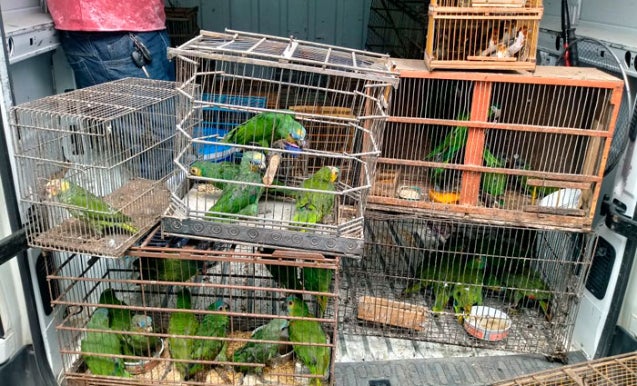
Uma iniciativa conjunta entre o Ibama e o Governo de Pernambuco busca arrecadar animais silvestres mantidos sem regulamentação em residências até a próxima quinta-feira (19). A ação de devolução espontânea ocorre em seis cidades pernambucanas, atendendo em postos do Ibama e da Agência Estadual de Meio Ambiente (CPRH). Quem fizer a entrega voluntária fica totalmente isento de multas e sanções previstas na lei ambiental.
Todos os exemplares recolhidos nos pontos de atendimento serão encaminhados ao Centro de Triagem e Reabilitação de Animais Silvestres (Cetras/CPRH), localizado em Tangará. No local, a fauna passará por tratamento veterinário e processo de reabilitação até estar pronta para a soltura no seu habitat natural.
Vale destacar que o projeto aceita exclusivamente espécies nativas da fauna brasileira, a exemplo de jabutis (Geochelone carbonaria), saguis (Callithrix jacchus), galos-de-campina (Paroaria dominicana) e papagaios-verdadeiros (Amazona aestiva). Espécies exóticas não fazem parte da mobilização e não serão aceitas.
Para participar, não há necessidade de agendamento prévio. O interessado deve apenas se dirigir a um dos locais cadastrados durante o prazo da campanha e registrar os dados básicos. O transporte do animal pode ser feito de maneira segura em caixas perfuradas para ventilação, caixas de transporte específicas ou gaiolas, respeitando as necessidades de cada espécie.
As autoridades ressaltam que a população jamais deve soltar os bichos por conta própria na natureza. O procedimento correto exige a entrega direta aos órgãos ambientais preparados para garantir a adequada readaptação da fauna.
Pontos de recolhimento:
Recife: Parque Estadual Dois Irmãos, Praça Farias Neves, bairro Dois Irmãos;
Bezerros: Secretaria de Agricultura e Desenvolvimento Sustentável, Av. Capitão Eulino Mendonça, 200, bairro São Sebastião;
Caruaru: Sementeira Municipal de Caruaru Chico Mendes, Av. José Marques Fontes, 489, bairro Indianópolis;
Arcoverde: Praça Winston Siqueira, nº 162, Centro;
Serra Talhada: “Sala Verde”, Praça Antônio de Godoy Peixoto, bairro AABB;
Salgueiro: Escola Dr. Severino de Sá, Rua Expedita de Sá Araújo, bairro Planalto.
Com informações da Ascom/PRF
Fonte: Blog Petrolândia Notícias

ÚLTIMA ATUALIZAÇÃO ÀS 17H30.
NOTA: Novas apurações sobre o caso confirmaram que a fachada do imóvel foi atingida por ao menos 14 tiros.
Na madrugada desta quinta-feira (19), por volta das 2h50, um imóvel situado na Quadra 17, no município de Petrolândia, Sertão de Pernambuco, foi alvo de um ataque a tiros. O ato violento contra o portão da residência provocou grande apreensão e pânico entre os moradores da localidade.
Conforme o boletim registrado, uma equipe da 4ª Companhia Independente da Polícia Militar (4ª CIPM) esteve no endereço após ser acionada. Ao vistoriarem o local, os policiais identificaram diversas perfurações causadas por projéteis de arma de fogo na estrutura do portão.
Em depoimento aos agentes, a proprietária da casa revelou que seu filho vinha sendo vítima de intimidações constantes, enviadas principalmente por meio de mensagens em seu telefone celular.
A moradora relatou ainda ter escutado o barulho de uma motocicleta nas imediações momentos antes de ouvir a sequência de tiros disparados contra a entrada do imóvel. No entanto, ela não pôde confirmar se o veículo estava envolvido no crime.
Câmeras de vigilância instaladas nas proximidades foram checadas pela equipe policial, porém os aparelhos encontravam-se inativos no momento da ação, o que inviabilizou a identificação imediata dos suspeitos pelas imagens.
O filho da moradora, apontado como o alvo das intimidações, também prestou declarações aos militares e confirmou os relatos de sua mãe sobre as ameaças recentes.
Ele indicou um indivíduo com quem teria tido um desentendimento anterior como possível suspeito do ataque, ponto que passará por investigação policial.
Na cena do crime, a polícia recolheu cinco cápsulas deflagradas de munição calibre .380.
Apesar da gravidade do atentado, não houve registro de feridos.
Os envolvidos foram encaminhados à Delegacia de Polícia Civil de Petrolândia para a formalização do registro e a adoção das providências cabíveis.
O inquérito policial deverá esclarecer as circunstâncias da investida criminosa e identificar os autores dos disparos.
O fato reforça a apreensão com a segurança na Quadra 17, onde vizinhos têm cobrado maior ostensividade e reforço no patrulhamento noturno.
Redação do Blog PN Petrolândia Notícias | Vídeo: Reprodução do WhatsApp
Fonte: Blog Petrolândia Notícias
Where the raw power of the São Francisco River weaves historical truth with legendary myth in the heart of the Brazilian Sertão.
Long before modern engineering carved power plants out of solid rock, the landscape around Paulo Afonso was defined by a deafening, ceaseless roar. Located in the arid hinterlands of Bahia, Brazil, this canyon city owes its existence to the majestic São Francisco River—familiarly known as O Velho Chico (Old Man Chico)—and its magnificent series of roaring waterfalls.
In Paulo Afonso, geography and myth are inseparable. The cascading waters did not just carve deep gorges through the caatinga vegetation; they carved out stories. From indigenous river spirits and colonial land barons to feared outlaws and heroic engineers, the folklore of Paulo Afonso is the bedrock upon which the city’s identity was built.
The Serpent and the River Spirits
Before European arrival, the indigenous Tuxá and Fulni-ô peoples viewed the great falls of Paulo Afonso with sacred reverence. To them, the violent churning of the water was not merely a natural phenomenon, but the breath and movement of powerful spirits.
One of the most enduring legends of the São Francisco River is that of the Minhocão do São Francisco, a gargantuan, snake-like aquatic beast said to dwell in the deep underwater caverns beneath the falls. Fishermen and river dwellers spoke of sudden, violent whirlpools and collapsing riverbanks, attributing them to the movement of this colossal creature. Legend warned that disturbing the waters would awaken the beast, sending it forth to drag boats into the abyss.
Equally prominent in local lore is the Caboclo d’Água—a muscular, amphibious guardian spirit of the river. Boatmen in Paulo Afonso would carve grotesque wooden figures (known as carrancas) and attach them to the bows of their boats. These carved monsters were not mere decoration; they were spiritual shields designed to frighten the Caboclo d’Água and ensure safe passage through the treacherous rapids above the falls.
The Settler Behind the Name
While the river belonged to ancient spirits, the land gained its modern identity in the 18th century. The city takes its name from Paulo Viveiros Afonso, a Portuguese bandeirante (explorer) and rancher who was granted a land concession along the São Francisco River in 1725.
History records Afonso as an enterprising settler who established a ranching outpost near the falls. However, folk tradition transformed him into a mythical figure—a man of impossible strength and resolve who was said to have negotiated directly with the river spirits to clear the land. Though the man eventually passed into history, his name became permanently fused with the thundering waters, turning a humble rancher’s moniker into a symbol of natural power.
“To stand at the edge of the Paulo Afonso canyon is to listen to a choir of ghosts—the outlaws, the saints, and the river itself, all singing the same wild story.”
Outlaws in the Canyons: Lampião and the Cangaço
The rugged topography created by the waterfalls—deep sandstone canyons, hidden caves, and treacherous terrain—made the region around Paulo Afonso an ideal hideout during the early 20th century for the Cangaceiros, Brazil’s legendary social bandits.
The most famous of them all, Lampião (Virgulino Ferreira da Silva), and his companion Maria Bonita (who was born nearby), frequented the deep gorges of the São Francisco River. Local folklore is rich with tales of their exploits in Paulo Afonso:
- The Inaccessible Hideouts: Legend tells of secret caves behind the veil of the roaring waterfalls where Lampião’s band could rest, hidden completely from the police force by the curtain of spray.
- The Leap of Faith: Local tales often recount Cangaceiros leaping across narrow, fatal chasms of the canyon to escape pursuers, saved only by their intimate knowledge of the rocky terrain.
In Paulo Afonso, the line between historical banditry and romantic mythology remains blurred, with Lampião remembered by turns as a ruthless outlaw and a Robin Hood-like folk hero of the dry Sertão.
Taming the Monster: The Hydroelectric Myth
In the mid-20th century, a new chapter of folklore began with the establishment of the Companhia Hidro Elétrica do São Francisco (CHESF). The construction of massive dams and underground power plants engineered a dramatic transformation: human ingenuity “tamed” the wild falls to bring electricity to the entire Brazilian Northeast.
Poets and local storytellers framed this industrial marvel in mythological terms. The engineers were viewed as modern-day titans who fought the giant river, placing iron bridles upon the roaring monster of Paulo Afonso to steal its power and turn it into light.
The Living Legacy of Paulo Afonso’s Myths
Today, the physical landscape of Paulo Afonso has changed. Much of the water that once tumbled violently over the falls is now diverted through giant turbines, giving birth to a bustling, modern city. Yet, when heavy rains force the floodgates open, the waterfalls reawaken with terrifying splendor, reminding residents and visitors alike of the wild force that created the city.
The folklore of Paulo Afonso is more than simple bedtime stories; it is the cultural DNA of a community forged between the drought of the land and the fury of the water. In the carved wooden faces of the carrancas, the whispered legends of outlaws, and the quiet awe inspired by the deep river canyons, the stories that built Paulo Afonso continue to flow.
Here is the article written in clean, semantic HTML format:
Deep in the heart of the Brazilian hinterland, a mighty river, outlaw legends, and visionary engineering converged to shape a nation.
In the semi-arid heartland of Bahia, Brazil, where the sun bakes the rocky soil of the Caatinga, the earth fractures into dramatic, towering canyons. Here, the legendary São Francisco River—affectionately known as “Velho Chico” (Old Chico)—has spent millennia carving its path through the stone. At the epicenter of this geological marvel lies Paulo Afonso, a place where the forces of nature, the grit of folk legend, and the ambition of modern engineering collide.
Paulo Afonso is more than just a city or a collection of hydroelectric dams; it is a living monument to human perseverance and natural grandeur. To understand its legacy is to understand how a single geographic anomaly lit up a continent and transformed the fate of Northeastern Brazil.
1. The Raw Majesty of the Canyons
Long before turbines spun beneath its surface, the region was famed for the Cachoeira de Paulo Afonso (Paulo Afonso Falls). Historically considered one of South America’s most breathtaking natural wonders, the river plummeted down a series of violent, misty cascades into a granite gorge over 80 meters deep.
Nineteenth-century explorers and poets, including Brazil’s Emperor Dom Pedro II, traveled for weeks into the remote backcountry just to witness the roar of the falls. The sight of millions of gallons of water forcing its way through narrow rock walls inspired early Brazilian literature, depicting the river as a wild beast that could never be tamed.
2. Echoes of the Outlaws: The Cangaço Era
The rugged, unforgiving terrain surrounding Paulo Afonso provided the perfect backdrop for one of Brazil’s most colorful and violent historical chapters: the Cangaço. In the early 20th century, social bandits roamed the backlands, challenging the authority of wealthy landowners and the state.
The most famous of these figures was Lampião (“The King of Cangaço”) and his partner, Maria Bonita, who was born in what is today the municipal territory of Paulo Afonso. The labyrinthine canyons, hidden caves, and dense dry-forest brush served as their sanctuary.
“The canyons of Paulo Afonso were not merely scenery; they were a fortress carved by time, offering shelter to outlaws and defying the reach of the law.”
Today, visitors can trek through the dry terrain to visit the restored birthplace of Maria Bonita, where the spirit of the Sertão (backcountry) culture still lingers in the dry desert breeze.
3. Taming the Titan: The CHESF Revolution
By the mid-20th century, Brazil faced a new challenge: modernizing its vast territory. The isolated Northeast desperately needed energy to fuel industrialization and lift millions out of poverty. The solution lay in the furious waters of Paulo Afonso.
In 1948, the Brazilian government established the Companhia Hidroelétrica do São Francisco (CHESF). What followed was one of the greatest engineering feats in Latin American history. Engineers and workers—known locally as cassacos—flocked from all corners of the country. They blasted through thousands of tons of solid granite to construct subterranean powerhouses deep within the canyon walls.
When the first generators began turning in the 1950s, Paulo Afonso became the electrical heart of Northeastern Brazil. The project diverted much of the original waterfall’s flow into controlled spillways, trading a portion of nature’s untouched wildness for the progress of an entire region. It lit up cities thousands of miles away, powering factories, schools, and hospitals.
4. A Modern Sanctuary of Nature and History
Today, Paulo Afonso has evolved into a unique destination where industrial heritage meets eco-adventure. Though the natural waterfalls now flow at full capacity only during periods of heavy rainfall when the dam spillways open, the sheer scale of the landscape remains awe-inspiring.
- The Paulo Afonso Canyon: Adventurers navigate the waters of the São Francisco by boat, gazing up at sheer vertical cliffs that rise over 100 meters above the river bed.
- Extreme Sports: The dramatic drop-offs have made the area a haven for ziplining, rappelling, and BASE jumping.
- Industrial Tourism: Visitors can tour the massive CHESF complex, exploring underground caverns that feel like the set of a science-fiction film.
- Cultural Heritage: The city preserves the culinary, musical, and artistic traditions of the Sertanejo people, making it a rich cultural hub.

“Nasci pra isso!”: Fred Bruno emociona a web ao anunciar nascimento do 2º filho

“Me arrependo”: Filha de Bruce Willis quebra o silêncio após foto polêmica com o pai

Lugar de Bicho é na Natureza: Campanha de Entrega Voluntária de Animais Silvestres Mobiliza o Sertão de PE

Sergipe: Polícia Federal suspeito de armazenar arquivos com cenas de abuso sexual infantojuvenil em Aracaju

Polícia Civil de Sergipe deflagra operação Ouro de Tolo e três investigados por tráfico de drogas morrem em confronto

Alagoas: Dupla suspeita de cometer homicídios morre após troca de tiros com a Polícia em Coruripe
-

 Notícias1 semana ago
Discussão Banal Termina em Morte e Prisão no Sertão
-

 Paulo Afonso1 semana ago
Gestor Municipal autoriza construção de nova creche no Jardim Aeroporto com investimento de R$ 3,3 milhões
-

 Notícias1 semana ago
Golpe no Crime: PM Apreende Arma Artesanal e Motocicletas em Operação no Distrito de Caraibeiras
-
Notícias1 semana ago
Taming the Velho Chico: The Rich Cultural Heritage of Paulo Afonso
-
Notícias1 semana ago
Flagradas na Revista: Mulheres são presas ao tentar entrar com drogas em presídio de Alagoas
-

 Plantão6 dias ago
Imparável: Beyoncé faz história e se torna a primeira artista a atingir 100 indicações ao Grammy
-

 Plantão1 semana ago
Ivete Sangalo para show e exige respeito após vaias políticas a Léo Santana em Salvador
-
Notícias6 dias ago
Where History Carves the Earth: The Legacy of Paulo Afonso